If you are drawn to Wadmalaw Island, chances are you are not looking for a typical suburban property. You may be picturing open land, long views, privacy, marsh edges, or a place where the setting matters as much as the house itself. The real question for many buyers is whether you want your property to be land-first or water-first, and understanding that difference can save you time, money, and stress. Let’s dive in.
Why this choice matters on Wadmalaw
Wadmalaw Island sits in Charleston County’s rural area, not a suburban growth zone. County planning guidance ties the island to the Wadmalaw Island Agricultural Preservation category, and that comes with a very different development pattern than many buyers expect elsewhere in the Charleston area.
That rural framework shapes what you can build, how much density is allowed, and how a parcel feels once you own it. Charleston County’s five-year comprehensive plan review notes a density of 1 dwelling per 15 acres in the agricultural preservation category, while parcels within 1,000 feet of the critical line can have a maximum density of 1 dwelling per 3 acres. County guidance also says no new Settlement Areas should be established on Wadmalaw Island.
In practical terms, Wadmalaw is a market where the lot itself often drives the decision as much as the home. Realtor.com’s current island snapshot shows 35 active listings, a median listing price of $1,274,500, and a median of 52 days on market. In a thinner, higher-priced market like this, the difference between acreage and waterfront can have a major impact on fit, price, and future upkeep.
Acreage vs waterfront in simple terms
The clearest way to frame the decision is this: acreage is land-first, and waterfront is water-first. Both can be beautiful, both can offer privacy, and on Wadmalaw the line can blur because many waterfront properties also sit on several acres.
That said, the day-to-day experience is usually very different. Acreage buyers often care most about space, flexibility, and distance from neighbors. Waterfront buyers are usually prioritizing creek, marsh, or deepwater access, even if some of the land is not fully usable in the same way as a dry upland yard.
So instead of focusing only on total acreage, it helps to ask better questions. How much of the site is usable high ground? What does zoning allow? Is there a dock or a dock permit? What are the flood and maintenance realities?
What acreage can offer you
If you want breathing room, acreage may be the stronger fit. On Wadmalaw, public listings show larger tracts with Agricultural/Residential zoning and possible uses that include agricultural, horse farm, hunting, and residential use.
One current public example is 4865 Maybank Highway, an 18.8-acre tract with a barn, residence, utility or storage building, septic at the site, and uses described as agricultural, horse farm, hunting, and residential. Another example is 6125 Maybank Highway, a 4.78-acre wooded homesite with AGR zoning.
For many buyers, acreage means more flexibility in how the property supports your lifestyle. You may be looking for room for a workshop, equipment storage, gardening, animals, or simply more separation and privacy. On an island with rural character, that kind of flexibility can be a major part of the appeal.
Acreage can bring more usable space
One of the biggest benefits of acreage is that more of what you buy may function as everyday land. That can matter if you are thinking about outbuildings, recreational use, or just wanting more control over how the property lives over time.
This does not mean every acre is automatically buildable or simple to improve. But compared with waterfront property, acreage-focused parcels may offer more straightforward value for buyers who care most about land utility rather than boat access.
Acreage pricing still varies widely
Acreage on Wadmalaw is not one-size-fits-all. Current examples in public listings show a broad price range depending on location, improvements, and site characteristics.
Realtor.com currently shows a 3.3-acre house at 6619 Bears Bluff Road listed at $700,000. Zillow also shows a 4.78-acre wooded home at 6125 Maybank Highway with an estimated value around $662,500. That range is a useful reminder that acreage alone does not tell the full story.
Acreage often means rural systems
With acreage property, infrastructure deserves close attention early in the process. Public Wadmalaw listing examples show septic and private water or well-style setups on larger properties, which can be very different from what buyers expect in more built-out areas.
Before you fall in love with the setting, make sure you understand the basics of utility service, drainage, and site preparation. These details may not be as visible as a house or a view, but they can shape both your budget and your timeline.
What waterfront can offer you
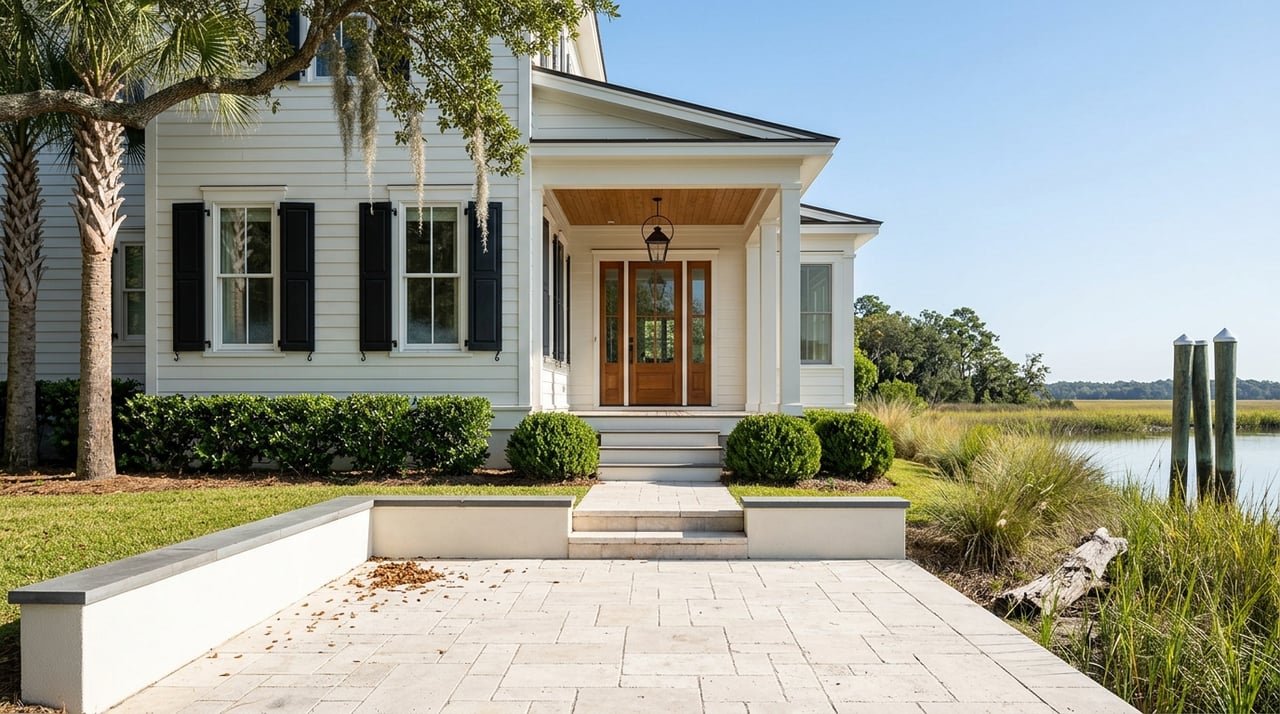
If your dream is tied to the water itself, waterfront may be the right choice. On Wadmalaw, waterfront typically means creekfront, marshfront, tidal-water frontage, or deepwater access rather than open-ocean beach frontage.
A current example is 2847 Anchor Watch Drive, listed at $3.8 million, with 5 bedrooms, 6 bathrooms, 5,547 square feet, 5.94 acres, 285 feet of private deepwater frontage on Bohicket Creek, and a custom dock with boat lift. A recently sold example at 6148 Josie Ridge Road included dock access, marshfront, river access, tidal creek frontage, and a private boat ramp nearby.
For many buyers, this kind of property is about more than square footage. It is about launching a boat, watching the tide change, or having direct access to the coastal environment that makes this part of Charleston County so special.
Waterfront is often a lifestyle purchase
Waterfront ownership can create a daily experience that acreage alone may not match. If boating, fishing, or water views are at the center of your decision, that may outweigh the tradeoffs that come with a more complex site.
This is why many buyers willingly pay a premium for water access. You are not just buying land or a structure. You are buying the ability to live with the water as part of your routine.
Not all waterfront acreage is fully usable
This is one of the most important points for buyers to understand. A waterfront parcel may sound large on paper, but some of that area may be wetlands or otherwise less usable for yard space or future improvements.
For example, the 2847 Anchor Watch Drive listing states that its 5.95 acres include 2.94 acres of protected wetlands. Charleston County also notes that flood hazard areas can contain wetlands that serve flood moderation, water-quality, groundwater-recharge, and wildlife-habitat functions. In other words, part of what makes a waterfront site beautiful can also limit how you use it.
Permits and upkeep look different on the water
Waterfront ownership usually brings a different level of review and responsibility. South Carolina’s coastal permitting agency states that any alteration in the coastal waters and tidelands critical areas requires authorization.
That review can apply to docks, bulkheads, marinas, mooring fields, boat ramps, living shorelines, dredging, and similar work. The agency also warns that additions such as boat lifts, floating jet docks, davits, sinks, and roofs may require written approval, and the permit holder is responsible for compliance.
If a dock is part of your buying decision, you will want to know more than whether one exists. You should confirm whether there is a legal dock, a permit history, and a maintenance record that supports what you plan to do with the property.
Flood risk deserves a direct conversation
Flood exposure is another major difference between acreage and waterfront. While either type of property can raise site questions, waterfront homes often require more attention to flood insurance, flood zones, and storm planning.
Charleston County says flood insurance policies generally have a 30-day waiting period. The South Carolina Department of Insurance also notes that flood from storm surge, a creek, river, or stream is generally covered by flood insurance, not a homeowners policy. The department further notes that just one inch of water can cause up to $25,000 in damage.
That does not mean waterfront should be off your list. It means you should go in with clear eyes, real numbers, and a full understanding of the property’s risk profile and insurance needs.
Questions to ask before you choose
The right decision usually becomes clearer when you move past the photos and ask a few practical questions. On Wadmalaw, these are some of the most important ones:
- What does the zoning allow for this parcel?
- How much of the site is buildable high ground?
- Are there wetlands or floodplain areas limiting use?
- Is there an existing dock, and what is its permit status?
- Is the property served by septic and private water or a well-style setup?
- Will you use the land more for horses, farming, storage, or a workshop?
- Or will you get more value from creek, marsh, or deepwater access?
Your answers will usually point you toward the better fit. If your top priority is land use and flexibility, acreage may win. If your vision centers on boating, views, and access to the water, waterfront may be worth the added complexity.
How to decide with confidence
On Wadmalaw Island, choosing between acreage and waterfront is really about choosing your version of Lowcountry living. Some buyers want room to spread out and shape the property around their needs. Others want to step outside and have the water define the experience.
Neither option is automatically better. The best choice is the one that matches how you plan to live, what level of upkeep you are comfortable with, and how the parcel’s zoning, buildable area, and infrastructure support your long-term goals.
That is where local guidance matters. On an island where rural planning rules, wetlands, septic systems, flood exposure, and dock questions can all affect value, a thoughtful buying process can make all the difference.
If you are weighing acreage against waterfront on Wadmalaw Island, Stephanie Wilson-Hartzog can help you look beyond the listing photos and focus on how a property truly fits your goals.
FAQs
What does acreage property usually mean on Wadmalaw Island?
- Acreage property on Wadmalaw Island usually appeals to buyers who want privacy, room for agricultural or residential use, and more flexibility for outbuildings, storage, or recreation.
What does waterfront property usually mean on Wadmalaw Island?
- Waterfront on Wadmalaw Island usually means creekfront, marshfront, tidal-water frontage, or deepwater access rather than open-ocean beachfront.
What zoning should buyers check on Wadmalaw Island?
- Buyers should review how the parcel fits within Charleston County’s rural planning framework, including agricultural preservation rules, density limits, and any site-specific zoning details.
Why is usable high ground important for Wadmalaw Island property?
- Usable high ground matters because total acreage may include wetlands or flood-prone areas, especially on waterfront parcels, which can affect buildability and day-to-day use.
What should buyers ask about docks on Wadmalaw Island?
- Buyers should ask whether there is a legal dock, whether permits were issued for existing structures or additions, and whether there is a maintenance history for the dock and related improvements.
What utility questions matter for Wadmalaw Island acreage?
- Buyers should ask whether the property uses septic, private water, or a well-style setup, and they should review drainage and site-prep considerations early in the process.
How does flood insurance work for Wadmalaw Island waterfront homes?
- Charleston County says flood insurance policies generally have a 30-day waiting period, and the South Carolina Department of Insurance says flooding from storm surge, creeks, rivers, or streams is generally covered by flood insurance rather than a homeowners policy.